Mimic Party and Dub Together: Games Like The Choicer Voicer
Voice is one of the most personal tools a player can bring to a game. You do not need to learn a complicated control scheme, memorize a list of combos, or own expensive equipment. You only need a microphone, a willingness to perform, and a few friends who are ready to laugh at themselves.
That is the appeal behind games such as The Choicer Voicer, Mimic Party, and Voxalike. These games use voice not as a background feature, but as the main way players interact with the game and with one another. Instead of pressing buttons to solve a problem, players imitate sounds, dub scenes, react to prompts, and turn mistakes into the funniest moments of the session.
A Different Kind of Party Game
Traditional party games often test trivia knowledge, reflexes, drawing ability, or the skill of convincing other players that a bluff is true. Voice-driven party games test something less predictable: how people interpret a sound or a scene in the moment.
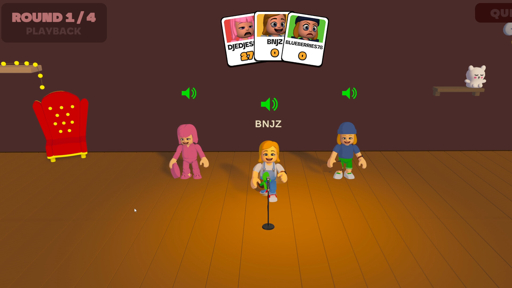
In Mimic Party, players hear a reference sound and attempt to recreate it with their voices. The challenge can involve an animal noise, a machine sound, a strange vocal effect, or something difficult to describe. Everyone records at the same time, and the group then hears the results.
The rules are simple, but the outcome is never predictable. One player may focus on accuracy. Another may make an exaggerated version that is technically wrong but much funnier. A third player may completely fail to reproduce the sound—and accidentally create the best moment of the round.
This is what makes voice games work so well at parties: failure is not a problem. It is part of the entertainment.
From Imitation to Dubbing
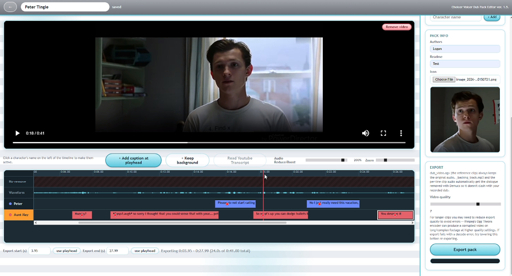
While Mimic Party focuses on reproducing sounds, games inspired by The Choicer Voicer take a more theatrical direction. They ask players to provide dialogue for scenes, characters, and video clips.
Dubbing changes the challenge. Instead of asking, “Can you make this sound?”, the game asks, “What would this character say here?” Players must pay attention to timing, emotion, facial expression, and the rhythm of the scene. The goal may be to imitate an original performance, but it can also be to create a completely new interpretation.
A dramatic scene can become a comedy. A calm conversation can become an argument. A single pause can turn an ordinary sentence into a joke.
This makes dubbing games especially good for groups with different personalities. The player who is shy during conversation may be brilliant at quiet character voices. The player who loves improvisation may turn every scene into chaos. The player who tries too hard to be accurate may become the unexpected winner when their timing is perfect.
Why Playing Together Matters
Voice games are often more entertaining with other people because the audience is part of the game. Listening to a recording is only half the experience. The other half is hearing everyone react to it.
A good multiplayer session creates a cycle:
- The group hears a prompt or watches a scene.
- Each player records an interpretation.
- The recordings are replayed.
- Everyone laughs, compares performances, and starts quoting the best lines.
- The next round becomes even more chaotic because players are trying to top the previous one.
This shared reaction is difficult to reproduce in a solo game. Even when a player records something funny alone, the moment becomes more memorable when friends hear it immediately. Multiplayer voice games turn performance into a conversation.
They also create their own language over time. A strange impression, a bad sound effect, or an accidental line reading can become an inside joke that returns in later sessions. The game is not only a collection of rounds—it becomes a collection of memories.
Voxalike and Online Dubbing
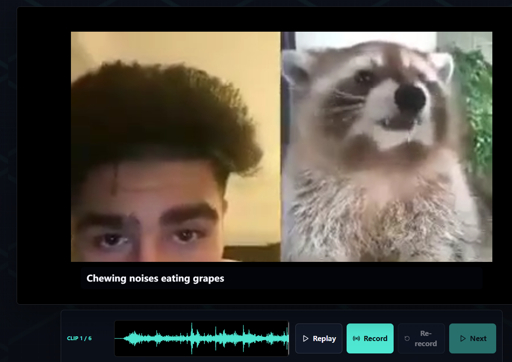
For players who want the dubbing format but need online play, Voxalike shows how this style can work in a browser-based multiplayer setting. It centers on dub packs and lets players use their microphones to perform lines over scenes. The result is a format that can support both cooperative play and competition.
In a cooperative session, players can work together to create one shared dub. Each person takes a role, records their lines, and helps build a complete scene. This can feel like a tiny improvised production, especially when the group decides on character voices before recording.
In a competitive session, the same clip can become a challenge. Players may compete for the most accurate delivery, the funniest interpretation, or the strongest reaction from the group. Scoring can add structure, but the real reward is usually the replay.
The appeal of online dubbing is that distance matters less. Friends do not have to be in the same room to make something together. A short scene can become a shared project, even when the players are in different cities or time zones.
How to Host a Great Voice Game Night
A microphone-based party game works best when the environment feels relaxed. Players should know that they do not need to be professional voice actors. The goal is to try things, make mistakes, and give everyone room to participate.
A few simple choices can improve the session:
- Ask players to use headphones when possible to reduce echo.
- Test microphones before beginning a longer round.
- Start with short, low-pressure prompts.
- Let players choose whether they want to imitate, improvise, or stay close to the original.
- Replay the funniest recordings at the end of the session.
- Save memorable lines or clips for future themed packs.
It also helps to vary the mood. Begin with easy sound effects, move into character voices, then finish with a dramatic or ridiculous dubbing challenge. The group will usually become more confident as the night goes on.
The Future Is Loud
Games like The Choicer Voicer, Mimic Party, and Voxalike show that multiplayer games do not always need complex mechanics to create strong social moments. Sometimes, a single strange sound and a countdown are enough.
The microphone becomes a controller, a stage, and a tool for improvisation. Every player brings a different voice, a different sense of timing, and a different idea of what is funny. That means no two sessions sound the same.
Whether you are trying to imitate a robot, dub an emotional cartoon scene, or make your friends laugh with the worst possible character voice, these games turn performance into play. The best recording may not be the most accurate one.
It may simply be the one nobody can stop quoting.